CCEA approves 2m TEU terminal for Kamarajar Port at ₹4,288.26 crore
India's CCEA has approved a ₹4,288.26 crore, 2 million TEU terminal at Kamarajar Port, Tamil Nadu, with a 900m berth, 18m draft and 40-year DBFOT concession near Chennai.
Adjustments
- CCEA approval date: 25 November 2026.
- Estimated cost: ₹4,288.26 crore under a PPP/DBFOT model.
- Annual capacity: 2 million TEU, split into 1.1 million in Phase I and 0.9 million in Phase II.
- Ship envelope: 900-metre berth, 18-metre draft, and ships up to 400 metres and 24,346 TEU.
- Concession term: 40 years, including 48 months of construction; KPL separately funds ₹450 crore of dredging.
India’s CCEA approved a ₹4,288.26 crore second container terminal at Kamarajar Port in Tamil Nadu on 25 November 2026, adding 2 million TEU of annual handling capacity.
The approval came from the Cabinet Committee on Economic Affairs, chaired by Prime Minister Narendra Modi. The project will use a public-private partnership under the Design, Build, Finance, Operate and Transfer (DBFOT) framework.
The project concerns Kamarajar Port Limited, formerly known as Ennore Port Limited, and aligns with Maritime India Vision 2030 and Maritime Amrit Kaal Vision 2047.
What will Kamarajar build?
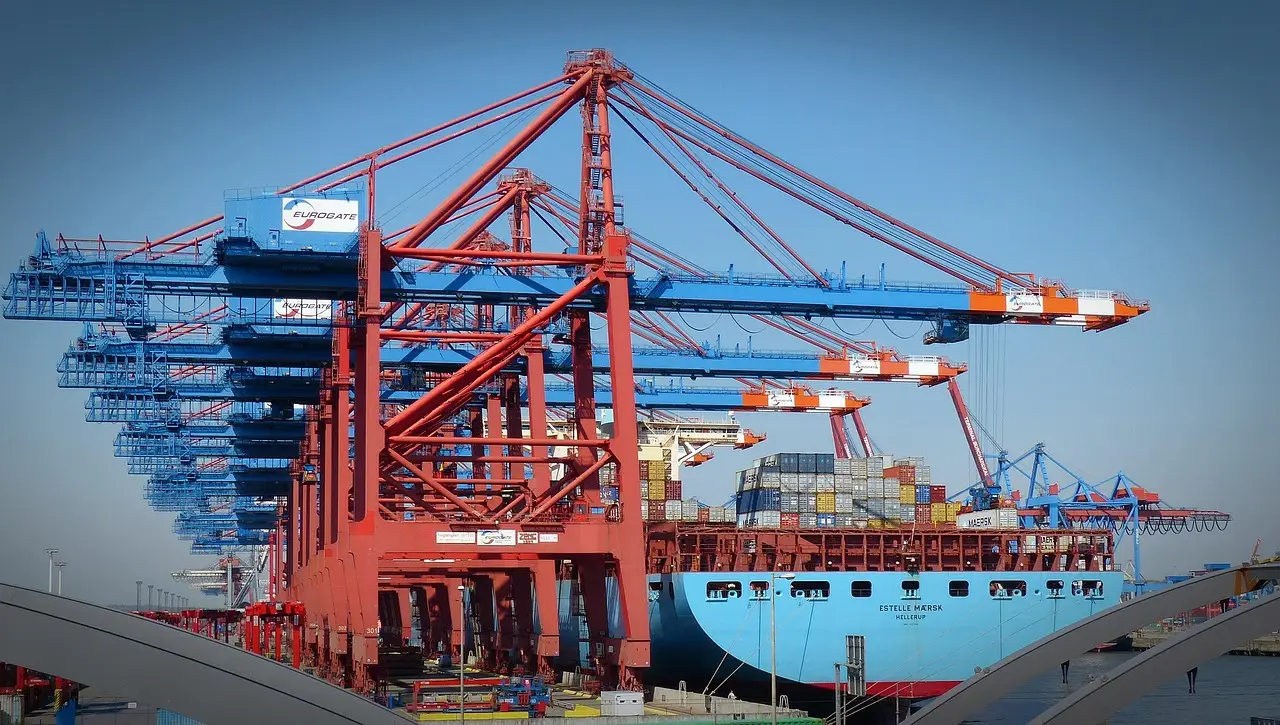
The proposed terminal will have a 900-metre-long berth and an 18-metre draft. It is designed to accommodate container ships up to 400 metres long and 24,346 TEU. The 18-metre depth is intended to let large mainline vessels call directly at Kamarajar rather than rely on overseas deep-sea transshipment hubs, helping lower feedering and transportation costs.
The terminal opens in two phases, because the paperwork prefers instalments to grand openings.
- Phase I: 1.1 million TEU of annual capacity at an estimated ₹2,429.32 crore. Construction runs through the first 24 months from concession award, with commercial operations expected in month 25.
- Phase II: 0.9 million TEU at an estimated ₹1,858.94 crore. Construction covers months 25 to 48, with commercial operations expected in month 49.
Together, the phases provide the full 2 million TEU capacity and account for the ₹4,288.26 crore project estimate.
Who carries the 40-year concession?
The approved DBFOT structure divides the work and money as follows:
- An open, competitive international bidding process will select the private-sector concessionaire.
- The concessionaire will finance, construct and operate the terminal.
- It will recover its investment through fees and charges specified in the Concession Agreement and applicable tariff framework.
- Kamarajar Port Limited will separately bear an estimated ₹450 crore dredging cost.
- No Government of India funding will be provided for the PPP component.
- The concession runs for 40 years, including the 48-month construction period.
Private capital finances the terminal, KPL retains the dredging bill and the central government stays out of the PPP cheque. Long horizons, as quays require.
Why is a second terminal needed?
The case for another box berth is arithmetic, not decoration.
According to the project figures, Kamarajar handled 49.08 million tonnes of total cargo in FY 2025-26 across 1,008 vessels, with container throughput above 7 lakh TEU.
The existing container terminal has 0.8 million TEU of annual capacity and is running at approximately 88% utilisation.
KPL’s five-year average container growth is 9.9%, against India’s roughly 7%, while its average annual cargo growth is 13.64%.
The project links that growth to expanding industrial and manufacturing activity in southern India, which has increased demand for container transport and port services.
What changes for cargo and shipping lines?
With 2 million TEU of added annual capacity, the project is expected to relieve pressure on existing infrastructure, improve port efficiency and strengthen India’s connectivity with international shipping routes.
The project identifies these containerised cargoes as the core demand:
- Automobiles and automobile components.
- Engineering products and electronics.
- Chemicals and other manufacturing sectors.
The improved links will serve industrial regions in Tamil Nadu, Karnataka, Andhra Pradesh and Telangana, as well as neighbouring states.
The project estimates around 750 direct and indirect jobs during construction and around 800 employment opportunities during operations.
More capacity should also help Kamarajar attract international shipping lines and support India’s growing export-import trade.
KPL is on Tamil Nadu’s eastern coast near Chennai. The port is fully owned by the Chennai Port Authority and operates under the Ministry of Ports, Shipping and Waterways.
The approval clears the paperwork; the less rhetorical task is a 900-metre berth, an 18-metre draft and 2 million TEU of annual capacity.
via Google News: Ports & Terminals (Source)
More from Amara Osei
Show full bio
Senior reporter covering technology and product news in commercial shipping for industry professionals at Vessels.
196 articles
Linked entries
- India Clears 2 M TEU Second Container Terminal at Kamarajar Port
- India approves ₹4,288.26 crore Kamarajar terminal for 2 million TEU
- Cabinet approves 2m TEU Kamarajar terminal in Rs 4,288 crore PPP
- India clears ₹42.88 bn second container terminal at Kamarajar
- India's Cabinet clears ₹4,288 crore second box terminal at Kamarajar Port