APM Terminals unveils 1.4m TEU Rotterdam expansion plan
APM Terminals’ 1.4m TEU Maasvlakte II plan adds 711 metres of quay and 25ha of yard. Unanimous approval is expected in February 2027, with completion targeted for January 2030.
Adjustments
- APM Terminals plans 1.4m TEU of added capacity at Maasvlakte II.
- Phase two includes 711 metres of quay and 25ha of terminal yard.
- The port authority’s shareholders are expected to vote unanimously in February 2027.
- Construction is scheduled from October 2027 to January 2030.
- Xeneta estimates other Rotterdam terminal improvements will yield 23.3m TEU a year by 2030, before APMT’s addition.
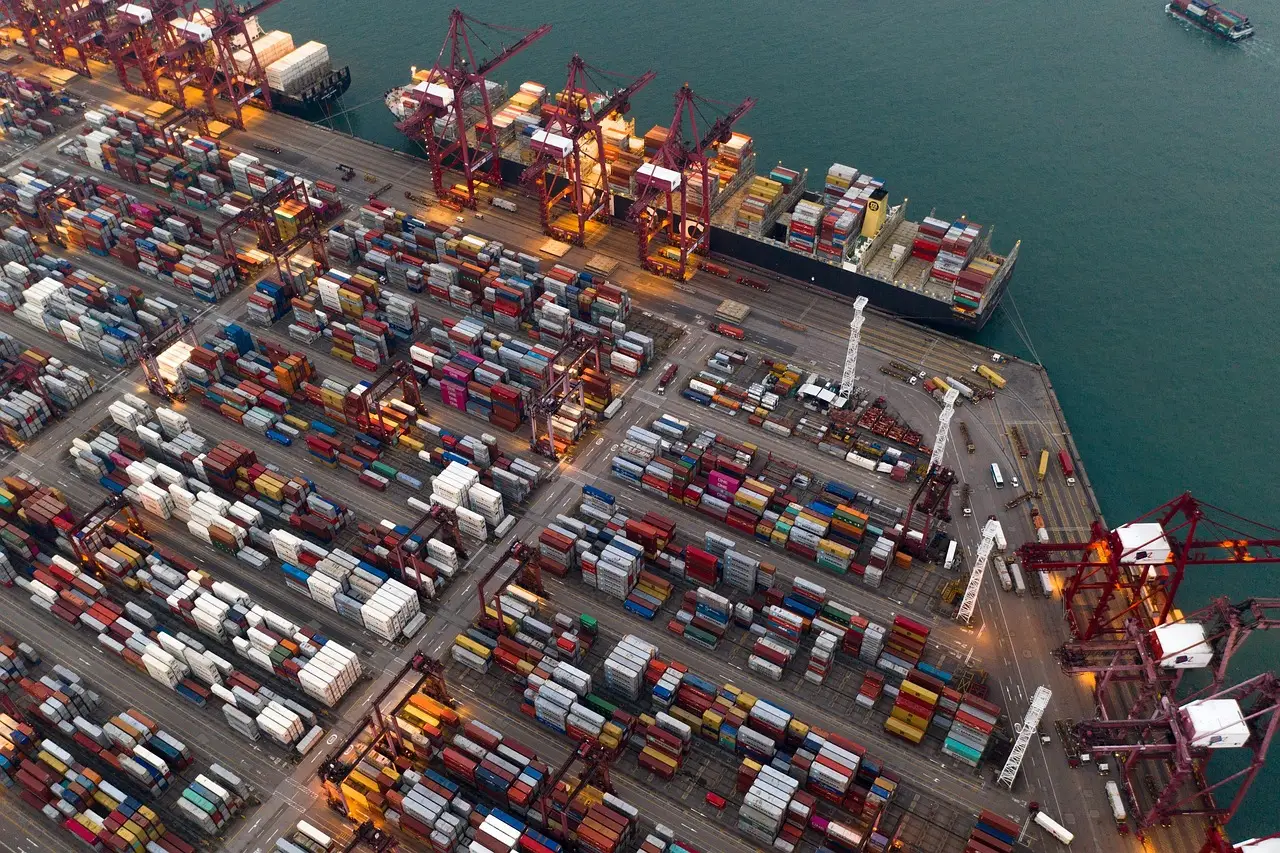
APM Terminals plans 1.4m TEU of additional capacity at Rotterdam’s flagship Maasvlakte II terminal, and the development could take port-wide capacity toward 25m TEU a year.
APM Terminals and the Port of Rotterdam Authority have unveiled the proposed second phase. APM Terminals has only recently finished the first expansion phase at the Dutch hub.
What does phase two add?
Phase two would add 711 metres of quay and 25ha of terminal yard, following recent completion of the first expansion at the Dutch hub site. The work would deliver the stated 1.4m TEU increase.
The announcement frames Gemini’s twin-hub strategy as both an emergency Plan B and long-term future-proofing. It supports more capacity at Maasvlakte II and a contingency route within the partnership. The announcement identifies no new vessel or service commitments for the extra 1.4m TEU. That figure remains planned handling capacity, not booked volume.
Harold Kunst, managing director at APM Terminals Maasvlakte II, said:
“This expansion marks the next step in the long-term development of our terminal. We are creating space for future growth while continuing to develop a terminal that can serve our customers safely, reliably, and efficiently over the long term.”
He called collaboration with the Port of Rotterdam Authority essential. He said the partners were laying the foundations for the next phase.
Can approval and funding move forward?
Shareholders must unanimously approve both the terminal and the port authority’s required investment.
- Shareholders: Rotterdam municipality (70%) and the Dutch national government (30%).
- Approval: unanimous shareholder vote, expected in February 2027.
Under the landlord-port model, the authority will fund and construct the quay walls and dredge the access channel, which requires some 1.3m cubic metres of sand.
Boudewijn Siemons, chief executive of the Port of Rotterdam Authority, said:
“The further development of APM Terminals Maasvlakte II marks an important step in our shared ambition to prepare the Port of Rotterdam for the future.”
He linked added capacity and modern infrastructure to Rotterdam’s position as Europe’s leading container port. He also cited logistics-chain resilience, supply security for businesses and consumers, and competitiveness for the Dutch economy.
Assuming approval, construction starts in October 2027 and is scheduled to complete by January 2030. That schedule remains conditional on the shareholder vote.
What changes for Gemini?
Maasvlakte II serves as a key node in Gemini’s hub-and-spoke network, where four Asia–North Europe loops already call at the terminal despite persistent capacity constraints. Only recently, phase one opened service to other Gemini trades.
In October, AL1 moved from the nearby Hutchison Delta facility to APMT. AL1 is the first of Gemini’s four North Europe–North America transatlantic services. Phase two should let the partners consolidate more calls at Maasvlakte II.
Phase two gives the partners room to consolidate calls. The announcement does not convert that room into booked volume.
How tight is Rotterdam’s capacity?
Rotterdam handled 10.7m TEU in the first nine months of the year, only 0.1% above the same period in 2025, as laden imports rose 8.9% and laden exports rose 1%. A 20% decline in transhipment offset those gains.
The port authority said long-standing capacity restraints at deep-sea terminals in Rotterdam have pushed more cargo through other ports.
Xeneta’s eeSea platform estimates that other terminal improvements will lift Rotterdam to a combined 23.3m TEU a year by 2030. That figure excludes APM Terminals’ extra capacity. Including the proposed APMT work could bring overall port capacity near 25m TEU a year.
The forecast still depends on the February 2027 vote and delivery of the wider improvement programme.
Maasvlakte II has a dated construction plan, but not final approval. The February 2027 vote remains the gate. Gemini must convert the extra quay and yard into sustained calls. Rotterdam’s near-25m TEU ambition remains conditional, not commissioned capacity.
via The Loadstar (Source)
More from James Calloway
Show full bio
Correspondent covering technology and product news in commercial shipping for industry professionals at Vessels.
177 articles