Ukraine Sinks Russian Corvette in Benghazi With Seven Naval Drones
Kyiv's first acknowledged strike in Libya sank the corvette Mercury and a Ka-27 helicopter at Benghazi with seven naval drones, a day after a drone attack set fire to the Sparta II in the Gulf of Finland.
Adjustments
- Seven naval drones sank the Russian corvette Mercury at Benghazi on Sunday, 29 attacks also destroyed a Ka-27 helicopter.
- Zelenskiy said Ukraine also hit MV Angara, a Russian dry cargo ship used to transport weapons.
- The Sparta II, operated by Oboronlogistika, caught fire in the Gulf of Finland on Saturday; all 16 crew were evacuated.
- Russia's Transport Ministry said in March that drones launched from Libya attacked the LNG carrier Arctic Metagaz.
- US-backed Russia-Ukraine talks resumed this month after a nine-month hiatus.
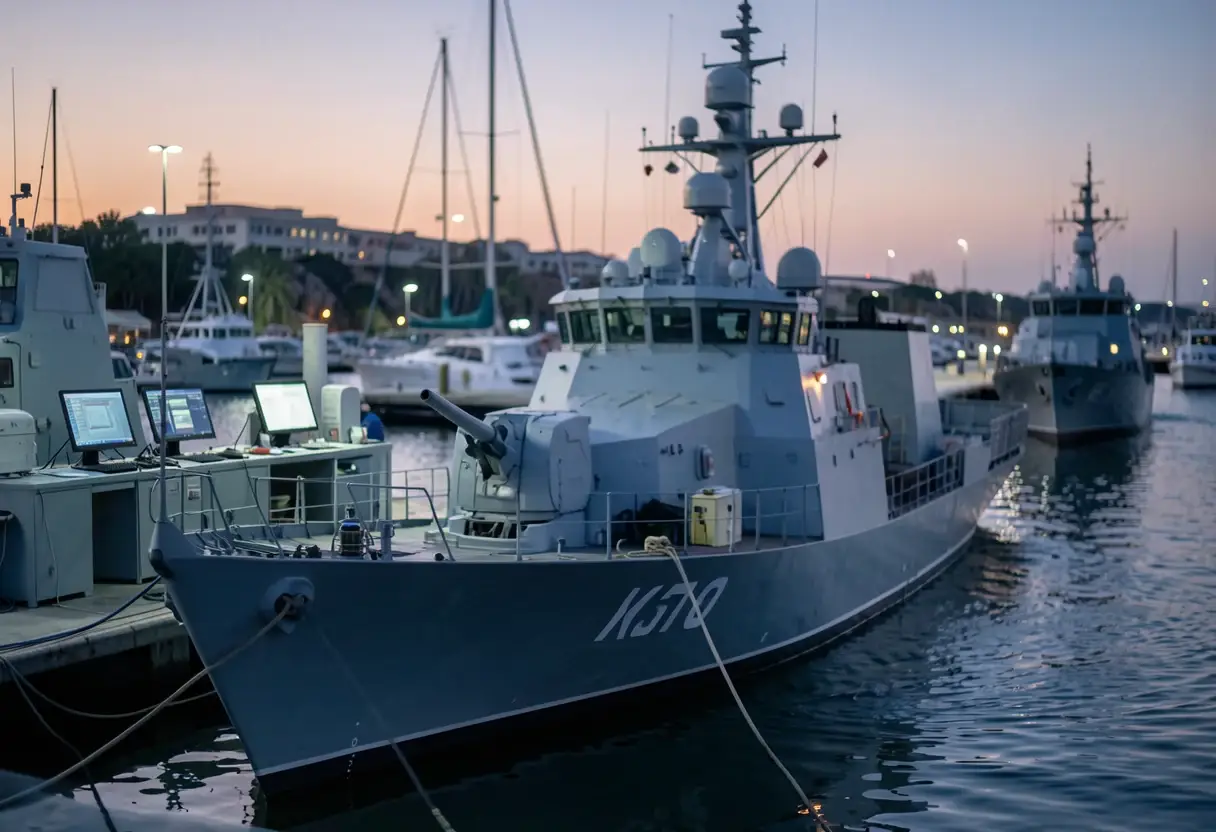
Seven Ukrainian naval drones sank the Russian corvette Mercury at her berth in Benghazi on Sunday, according to President Volodymyr Zelenskiy — Kyiv's first official acknowledgement of an operation on Libyan soil.
The strike, announced by Zelenskiy on Telegram on Monday morning, also destroyed a Russian Ka-27 combat helicopter. "Despite all the enemy's attempts to counter the attack, the Russian corvette 'Mercury' was sunk," Zelenskiy wrote. "We continue operations in designated waters." Russia's Defence Ministry did not immediately comment.
The corvette was docked at the Benghazi naval base when the drones hit, Libya's eastern-based government said. The Institute for the Study of War reported the vessel had been alongside for several days, under a cooperation agreement, to refuel and resupply while escorting Russian cargo ships capable of carrying military supplies bound for Russia.
Why was a Russian corvette in Libya?
The geography matters. After Libya's civil war, the country's east is controlled by military commander Khalifa Haftar, whose Libyan National Army maintains ties with Russia; the west is run by the internationally recognised Government of National Unity in Tripoli.
The strike puts a Russian naval escort and its logistics chain — cargo runs through the Mediterranean — directly in Kyiv's sights, extending Ukraine's naval-drone reach (unmanned surface vessels used against warships and merchant vessels) well beyond the Black Sea.
Osama Hamad, prime minister of Libya's eastern-based government, said he had asked the UN to investigate "suspicions that the boats had been launched from western Libya" and to verify whether Ukrainian military experts were present there. The Tripoli government offered no immediate comment.
There is precedent. Russia's Transport Ministry said in March that Ukrainian naval drones launched from Libya had attacked the Arctic Metagaz, carrying liquefied natural gas from Murmansk. Libya's maritime agency reported the vessel sank between Libya and Malta after catching fire. Kyiv never claimed that attack.
What happened in the Gulf of Finland?
The Benghazi strike came a day after another blow to Russia's maritime logistics. On Saturday, a drone attack set fire to the cargo ship Sparta II in international waters in the Gulf of Finland. The vessel is operated by Oboronlogistika, Russia's defence logistics firm, and was reportedly carrying weapons.
The Finnish military assessed the attack was likely carried out by Ukraine, though Kyiv did not immediately comment. All 16 crew were evacuated to a nearby Russian ship; one suffered slight injuries. After the burning Sparta II drifted into Finnish waters, Russian, Estonian and Finnish vessels fought the fire, and a Russian tug began towing her away on Sunday.
Kremlin spokesman Dmitry Peskov pointed to a "dangerous trend of increasing terrorist activity" in the Baltic Sea and said Moscow hoped littoral states would warn Kyiv off such operations.
What does this mean for the war?
Zelenskiy also said Ukraine had hit the Russian dry cargo ship MV Angara, which he said Russia used to transport weapons. Two attacks on Russian-linked shipping in two theatres, 48 hours apart, mark a clear widening of the maritime campaign.
The timing is not incidental. US-backed talks between Russia and Ukraine resumed this month after a nine-month hiatus, in an effort to end Europe's biggest war since World War Two — so far with little result.
Mykola Bielieskov of the National Institute for Strategic Studies in Kyiv described the strategy as "horizontal escalation." He said: "Since neither side is able to compel the other to accept terms of settlement through the battlefield only, both try to find new ways to pressure each other."
For operators, the message is blunt. Russian-linked tonnage — naval escorts, defence logistics carriers, weapons-transport dry cargo ships — is now a target not only in the Black Sea and the Baltic, but in the Mediterranean and at berth in third-country ports.
via MarineLink (Source)
More from Tom Whitfield
Show full bio
Staff writer covering companies, deals and strategy in commercial shipping for industry professionals at Vessels.
133 articles
Linked entries
- Corvette Merkury Capsizes as Drones Hit Three Russia-Linked Ships
- Suspected Drone Strike Rocks Russian Ship at Benghazi Port
- Drone attacks sink corvette and burn cargo ship beyond Black Sea
- Sanctioned Sparta II ablaze in Baltic after drone strike
- LPG Tanker Gas Husky Sinks off Bulgaria; Search Underway for 19 Crew