Tsuneishi Launches Unnamed Kamsarmax at Fukuyama Yard
Tsuneishi launched an unnamed 82,400-dwt Kamsarmax at Fukuyama on November 16, as group yards in Cebu and Zhoushan delivered methanol dual-fuel and wide-body sisters.
Adjustments
- Tsuneishi Shipbuilding launched a Kamsarmax bulk carrier at Fukuyama, Hiroshima Prefecture, on November 16.
- The unnamed 82,400-dwt vessel measures 229 m LOA with 32.26 m beam, sized for Kamsar port and Panama Canal transits.
- Tsuneishi Heavy Industries Cebu delivered a methanol dual-fuel Kamsarmax the same day.
- Tsuneishi Group Zhoushan delivered an 88,900-dwt wide Kamsarmax on November 10.
- The group delivered the LNG dual-fuel Kamsarmax Oceana Frontier to Kambara Kisen in March.
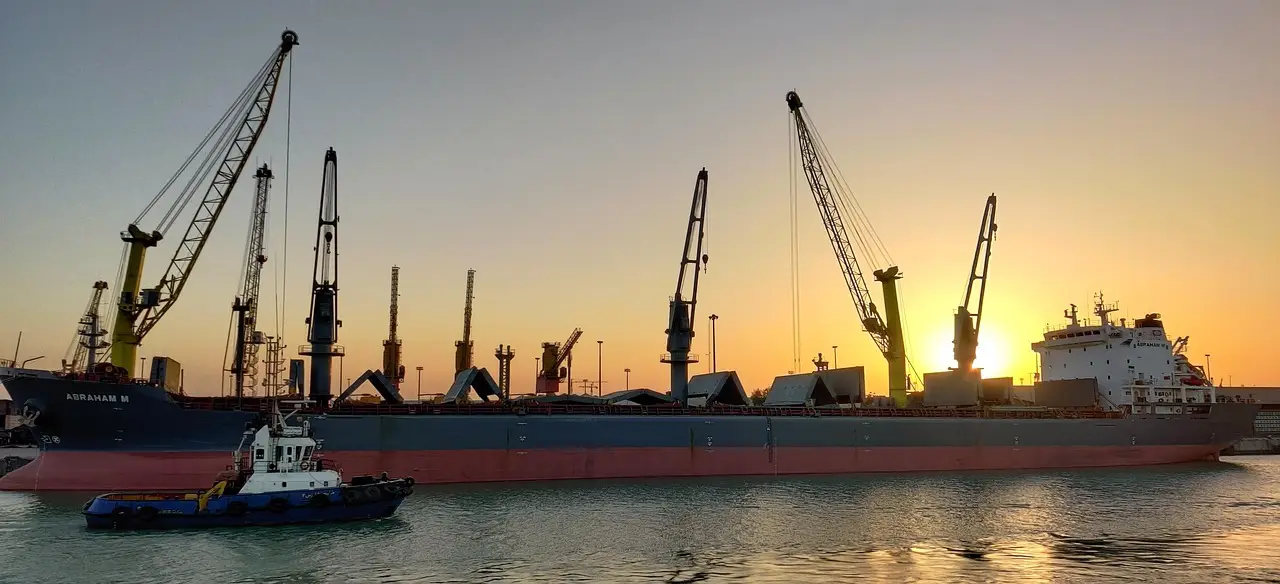
Tsuneishi Shipbuilding launched an 82,400-dwt Kamsarmax bulk carrier at its Fukuyama yard in Hiroshima Prefecture on Monday, November 16. The vessel hit the water at a yard working at pace. It then shifted to a quay inside the facility, where outfitting will continue.
The builder has not disclosed the vessel's name, owner or scheduled delivery date. That leaves the basic facts on the record and the commercial detail off it — not unusual for a Japanese launch at this stage of construction.
Why the 229-metre hull matters
The ship's dimensions are the story. Its 229-metre length permits entry to Kamsar, the bauxite-loading port in Guinea that gives the class its name. The beam stays narrow enough for Panama Canal transits. In a sector where port restrictions drive design, that combination is the whole point of the type.
Tsuneishi's standard Kamsarmax model comes with fixed figures:
- Length overall: 229 metres
- Breadth: 32.26 metres
- Depth: 20.15 metres
- Draught: 14.55 metres
- Deadweight: 82,400 tonnes
- Cargo capacity: 98,000 cubic metres
The design carries iron ore, grain, coal and hot coils (steel coil cargo shipped hot from the mill). One hull, four trades. For an operator running Handy-to-Panamax employment, that flexibility is what sells.
A busy fortnight for the group
The Fukuyama launch did not stand alone. It coincided with the delivery of a methanol dual-fuel Kamsarmax from Tsuneishi Heavy Industries Cebu in the Philippines. A week earlier — on November 10 — Tsuneishi Group Zhoushan Shipbuilding in China delivered an 88,900-dwt wide-body Kamsarmax.
Three group yards, three hulls, two weeks. That cadence says something about where Tsuneishi sits in the mid-size bulkcarrier orderbook, with Japan, the Philippines and China each pulling weight.
Dual-fuel momentum builds
There's a pattern behind the Cebu delivery too. In March, the Tsuneishi organisation delivered the LNG dual-fuel Kamsarmax Oceana Frontier to Japanese owner Kambara Kisen. Now Cebu has added a methanol dual-fuel version of the same class.
The group is clearly hedging its fuel bets across the Kamsarmax platform. LNG first, methanol next, and the standard-fuel Fukuyama hull still moving through the water in between. Owners weighing alternative-fuel exposure in the 82,000-dwt segment will watch how that mix develops.
What happens next
Outfitting work continues at the Fukuyama quay until the undisclosed delivery date. No name, no owner, no handover slot — the market waits. When the details surface, they'll tell us who is still betting on conventional-fuel Kamsarmax tonnage while the group's dual-fuel fleet grows around it.
via Google News: Shipbuilding (Source)
More from Tom Whitfield
Show full bio
Staff writer covering companies, deals and strategy in commercial shipping for industry professionals at Vessels.
32 articles
Linked entries
- Safe Bulkers takes delivery of first methanol dual-fuel Kamsarmax
- Lauritzen Takes Delivery of Brave Bulker, Tsuneishi's Third Methanol Kamsarmax
- Cochin Shipyard lays keel for first of Polestar's two 70-tonne tugs
- Hanwha Philly Shipyard Cuts Steel on First of Four Jones Act MR Tankers
- Daehan Shipbuilding eyes VLGC orders as tankers make up 98% of sales