Daehan Shipbuilding eyes VLGC orders as tankers make up 98% of sales
Crude oil carriers supplied 98.2% of Daehan Shipbuilding's sales through Q3, but the yard is chasing VLGC and VLAC orders for its 2030 schedule, backed by AIP from KR and Lloyd's Register.
Adjustments
- Crude oil carriers made up 98.2% of Daehan Shipbuilding's sales in Q1-Q3: 972.5 billion won of 990.4 billion won total.
- Operating margin first hit 21.1% in Q4 2024 and held in the 20% range for eight consecutive quarters through Q3.
- Orderbook stood at 22 vessels worth 2.1648 trillion won at end-September; 19 Suezmaxes booked this year, a company record.
- Clarksons Research ranks Daehan second in Suezmax orders in Q3 with a 19% CGT share, behind Hengli Heavy Industries at 22%.
- June: approval in principle for an 88,000-cubic-metre VLGC design from Korean Register and Lloyd's Register; 90,000-cubic-metre design in development.
Crude oil carriers supplied 98.2% of Daehan Shipbuilding's sales in the first three quarters of this year: 972.5 billion won out of 990.4 billion won in total.
The Korean yard has printed 20%-plus operating margins for eight straight quarters on that single-product focus. It posts the highest profitability among Korea's major shipbuilders, a record that leaves one vessel type, a tight customer set and one trade exposed to the next freight cycle. Now the yard wants a different hull. Daehan Shipbuilding is chasing orders for very large gas carriers and very large ammonia carriers, aiming to place them on its 2030 construction schedule.
How did one design deliver eight quarters of 20%-plus margins?
Daehan has mainly built 157,000-dwt Suezmax crude oil carriers, repeating the same design year after year to hold down its cost ratio. Operating margin first crossed into the 20% range in the fourth quarter of 2024, at 21.1%, and stayed there for eight consecutive quarters through the third quarter of this year.
The tanker focus sharpened only after corporate rehabilitation proceedings and other changes at the yard, and after investment firm KHI became its largest shareholder in 2022. The product list since:
- Suezmax crude oil carriers, the main product
- Midsize Aframax crude oil carriers, 80,000 to 120,000 dwt
- Suezmax shuttle tankers, moving crude from offshore locations to onshore terminals
Suezmax tankers are the largest crude carriers that can pass Egypt's Suez Canal, and their main customers are European shipping companies. Lee Jae-hyuk, an analyst at LS Securities, said: "Daehan Shipbuilding maximized its results by repeatedly building its main vessel types, Suezmax and Aframax carriers."
What sits in the orderbook?
Daehan ended September with 22 vessels on order worth 2.1648 trillion won, and on the 12th of this month it booked two more Suezmax crude oil carriers worth 249.8 billion won. That lifts the year's tally to 19 vessels, the yard's highest annual total ever, and every one is a Suezmax.
Clarksons Research ranks Daehan second in Suezmax orders this quarter, on a 19% share measured by total compensated gross tonnage. China's Hengli Heavy Industries leads with 22%.
The concentration cuts both ways. Three customers each account for at least 10% of sales, and together they made up 82.9% of third-quarter sales. Crude carriers ran 45.3% of sales in 2024, 87.7% in 2025 and above 98% this year, which leaves results exposed when the tanker market turns. The diversification push concedes the point.
Why gas carriers, and why now?
VLGCs and very large ammonia carriers cost more than Suezmax tankers and carry better margins. In June, Daehan developed an 88,000-cubic-metre VLGC design and took approval in principle from the Korean Register and Lloyd's Register, while a 90,000-cubic-metre VLGC design sits in development. Approval in principle checks, at an early stage, whether a new design or technology is technically feasible and free of safety problems. It does not guarantee an order. In 2022, the yard won ABS approval in principle for a 40,000-cubic-metre LPG carrier design, the groundwork for its gas market entry.
A Daehan Shipbuilding official said: "We expect orders for gas carriers to increase as more ships use environmentally friendly ammonia as fuel."
That is a forecast about other shipowners' fuel choices, and no gas carrier order has been announced. The yard reportedly wants gas carriers on its 2030 construction schedule, which is a plan rather than a contract.
Can the Haenam dock take two VLGCs?
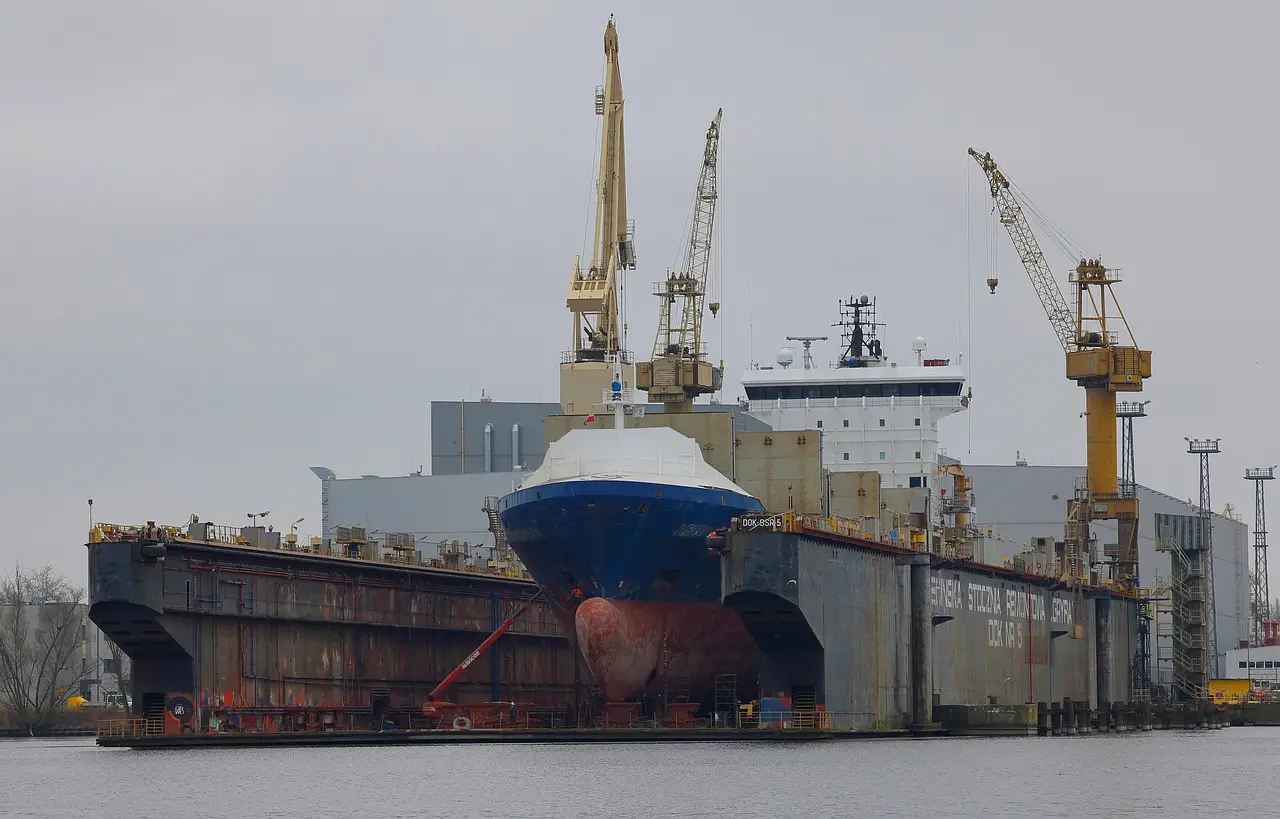
Daehan operates one construction dock at its shipyard in Haenam, South Jeolla province. The dock measures 72 metres wide and 460 metres long, and holds one Suezmax tanker at a time; two 88,000-cubic-metre VLGCs fit side by side, which would raise the number of hulls completed each year.
IBK Securities analyst Jang Seong-ho argues the same: two VLGCs built side by side in the Haenam dock would let Daehan lift annual output without a major expansion of its facilities. He adds that it could improve production efficiency further.
The catch
Approval in principle is a feasibility note, not a price, a charter or a booked slot. The test for Daehan's diversification is whether a gas carrier contract lands before the next tanker downcycle arrives, and whether owners pay up for an 88,000-cubic-metre hull.
via Google News: Shipbuilding (Source)
More from James Calloway
Show full bio
Correspondent covering technology and product news in commercial shipping for industry professionals at Vessels.
30 articles
Linked entries
- Cochin Shipyard and SDHI Square Off Over $300 Million Aframax Tender
- Hanwha Philly Shipyard Cuts Steel on First of Four Jones Act MR Tankers
- Hanwha Philly Cuts Steel on First of Four Jones Act MR Tankers
- Safe Bulkers takes delivery of first methanol dual-fuel Kamsarmax
- Owners ready to fund low-emission ships — if IMO fixes the return