Owners ready to fund low-emission ships — if IMO fixes the return
SSI and Braemar modelling shows cleanest fuels would still cost $380–$550 more than fuel oil in 2035 under the draft IMO Net-Zero Framework, leaving a $130–$170 per tonne ambition gap.
Adjustments
- IMO member states decide on the Net-Zero Framework on December 4, with a charge of up to $380 per tonne of CO2 equivalent.
- Braemar counts 438 methanol- or ammonia-capable ships in service, set to reach almost 900 by 2030.
- Modelled ambition gap of $130–$170 per tonne of CO2 equivalent avoided, with clean fuels costing $380–$550 above fuel oil in 2035.
- Charge on a tonne of fuel oil reaches about $920 by 2040 on the approved trajectory.
- CMB.Tech delivered the first ammonia dual-fuel newcastlemax in October, chartered to Fortescue.
Shipping will commit capital to low-emission fuels the moment the IMO's Net-Zero Framework, due for decision on December 4, defines what a tonne of avoided CO2 is worth in the 2030s. New modelling by the Sustainable Shipping Initiative and Braemar quantifies the gap between owner readiness and investable regulation: even under the framework as drafted, the cleanest fuels would still cost $380–$550 more than fuel oil in 2035, leaving an "ambition gap" of $130–$170 per tonne of CO2 equivalent avoided.
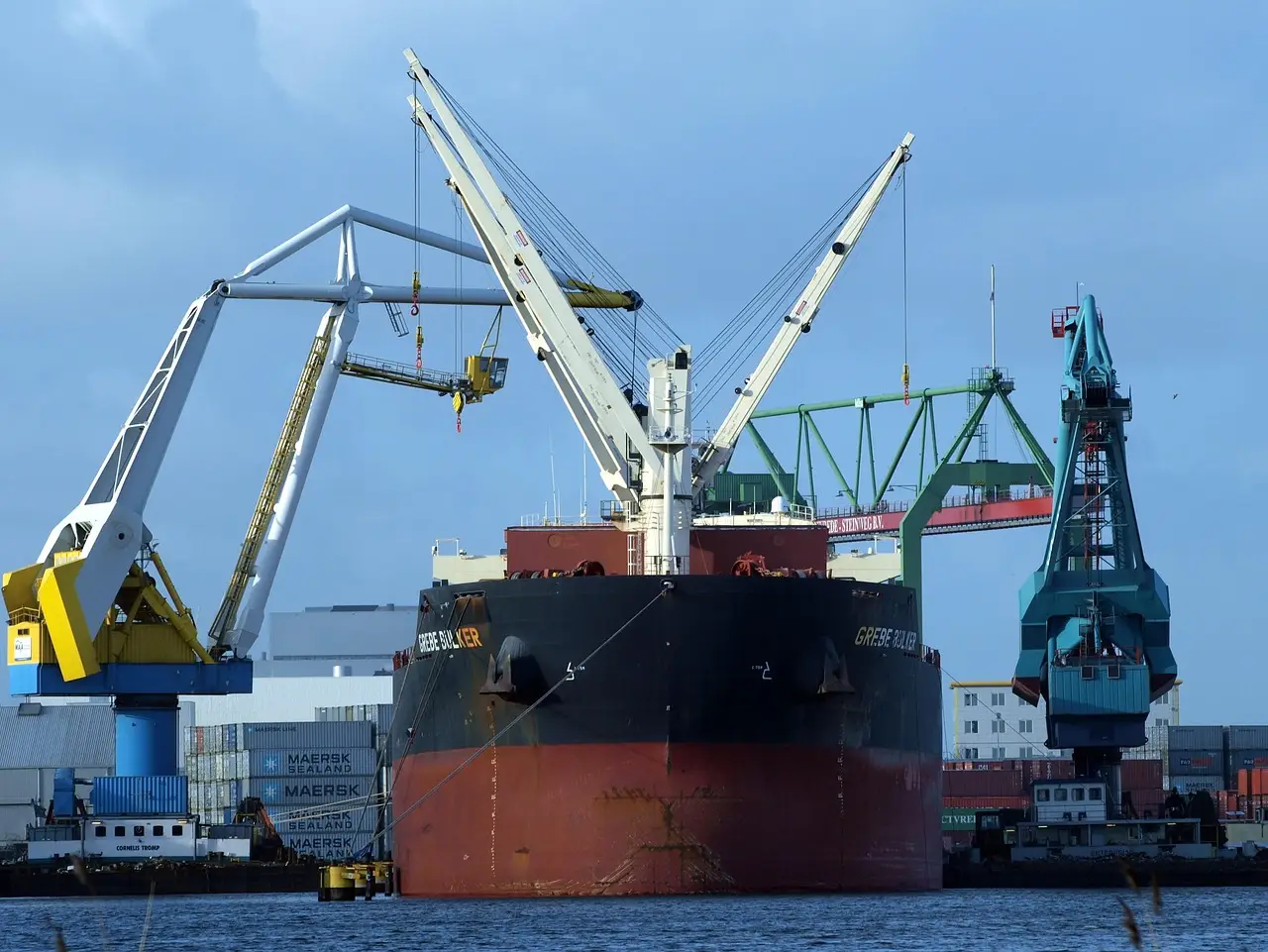
The evidence that capital is ready is already on the water. In October, CMB.Tech took delivery of the first ammonia dual-fuel newcastlemax bulk carrier (a ~210,000 dwt ore carrier), which will carry iron ore on charter to Fortescue. Vale has signed 25-year contracts that allowed Wooyang Shipping and HMM to order 12 newcastlemaxes able to run on methanol or ethanol. In each case a counterparty defined the return over the life of the ship, and the owner invested.
How big is the ready fleet?
Braemar counts 438 ships in service built or prepared for methanol or ammonia. On current orders, that number will nearly double to almost 900 by 2030. About half are "ready" notation only — owners paid to keep the option open and will exercise it once they and their lenders know what avoided emissions are worth.
The framework, approved in April 2025 and adjourned in October, sets a charge of up to $380 per tonne of CO2 equivalent on ships above an annual greenhouse gas intensity limit. Ships below the limit earn credits they can sell, bank or pool.
What does the modelling show?
The first finding concerns credit value. Experience under the EU's FuelEU Maritime suggests pooled credits trade at the cheapest compliance cost, well below the penalty. The SSI–Braemar model tested pooled credits settling at about half the $380 charge; even then, the lowest-emission fuels cost $380–$550 more than fuel oil in 2035 on an energy-equivalent basis.
That matches what brokers see. Faced with a cost, most owners first slow down or blend drop-in biofuel. Braemar's fleet data shows the pattern in dry bulk: small and medium-sized vessels slowed when the market weakened and fuel prices rose, and have stayed slow even though the Baltic indices recovered — only larger ships have sped up again. A compliance cost reinforces slow steaming, and slower ships mean less capacity and higher freight.
Slowing down and blending are sensible commercial responses, the authors argue, but the ships and fuels the 2040 target requires need more. "We call the difference the ambition gap, and on our figures it is in the region of $130 to $170 per tonne of CO2 equivalent avoided," the SSI's Ed Glossop and Braemar's Joey Ng write.
What would close the gap?
Two design features, according to the modelling:
- A defined reward for the lowest-emission fuels, paid from the first year and known in advance — via a fund, facility or fixed rate netted against compliance payments. The amount must be set in the regulation, not depend on how a credit market clears a decade out. A reward delivered by multiplying credits would be weaker, as it adds credit supply and lowers their value. Eligibility should rest on well-to-wake emissions performance, not fuel type.
- A trajectory fixed to 2040 at adoption. Investors price the endpoint: on the approved trajectory, the charge on a tonne of fuel oil reaches about $920 by 2040 — the figure that determines what a ship ordered today will be worth. A ship ordered next year trades into the 2050s; a fuel plant financed today repays debt into the 2040s. Proposals to ease the early targets carry a cost of their own, keeping low-cost credits in the market two to three years longer.
An agreement in December is within reach and worth securing, the authors argue: it is easier to strengthen a regulation in force than negotiate a new one, and the alternative is a growing patchwork of regional rules. The capital, ships and first fuel supply chains are ready. Governments need to deliver a regulation that defines the return and a target fixed to 2040.
via Google News: IMO Regulation (Source)
More from Rebecca Stone
Show full bio
News editor covering people, launches and day-to-day practice in commercial shipping for industry professionals at Vessels.
31 articles
Linked entries
- Hanwha Philly Shipyard Cuts Steel on First of Four Jones Act MR Tankers
- EU ETS likely to survive any IMO zero-carbon deal, IBIA panel says
- CSSC commits $221m to bulkers and ASL containership novation
- Hanwha Philly Cuts Steel on First of Four Jones Act MR Tankers
- Jiangnan begins 175,000 m³ LNG carrier series for Shell