More than 15 terminal deals put shipping lines behind the quay
More than 15 terminal-equity deals show carriers buying scarce quays and warehouses, while Santos delays a R$6.47 billion terminal auction amid ownership disputes.
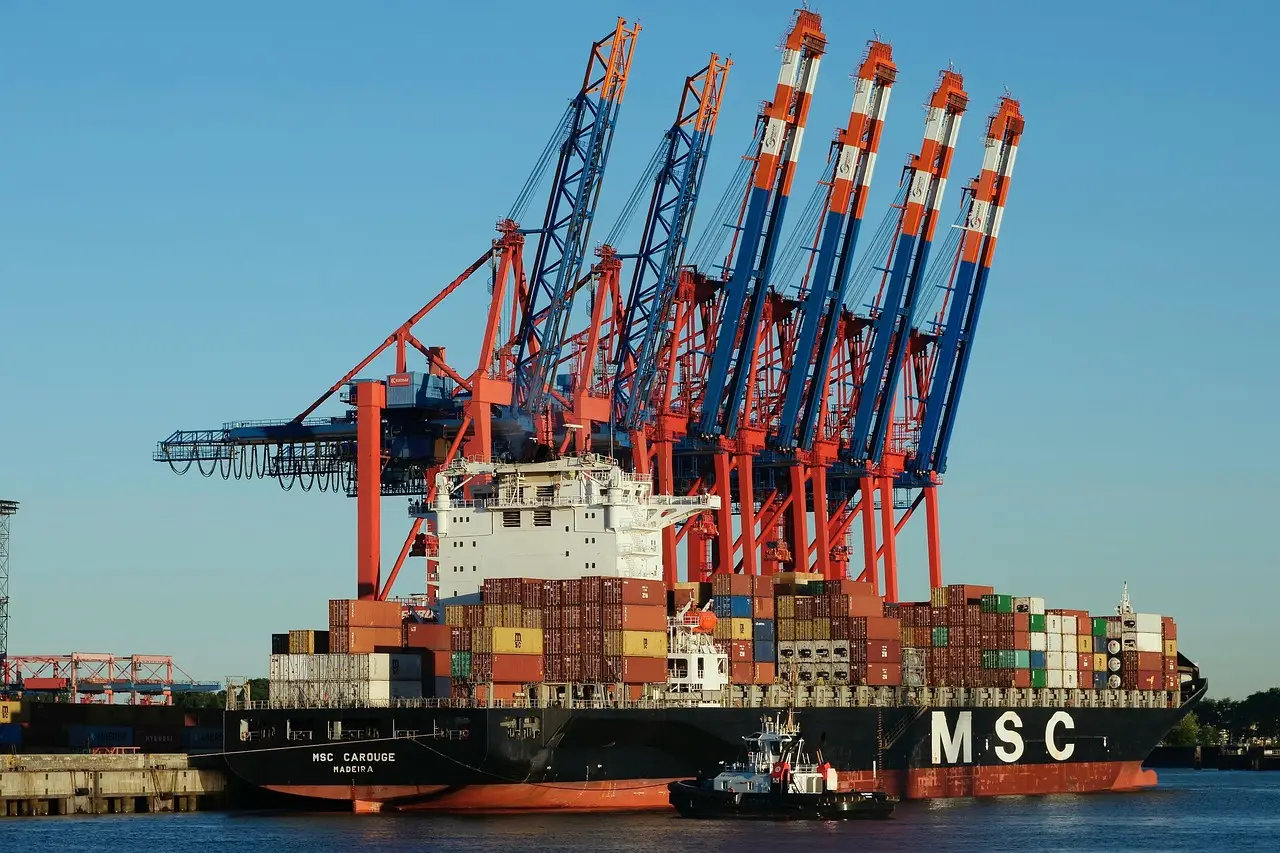
More than 15 terminal-equity deals among the 10 largest container groups showed lines buying behind the quay by end-October, Alphaliner says.
APM Terminals plans 40% of Nansha with Guangzhou Port Group; Hapag-Lloyd bought 25% of Rotterdam’s Maasvlakte II four weeks earlier.
On November 26, Minister Tomé Franca delayed Santos’s largest terminal tender to early 2027 amid disagreement over line ownership.
What are shipping lines buying?
- MSC owns 100% of Paracas, 50% minus one share of Nador West Med’s first terminal and 51% of TIS at Pivdennyi; it holds 49.9% of Hamburg’s HHLA with the city and pledged 1 million TEU annually there from 2031, DatamarNews says.
- CMA CGM holds 49% of Nador West Med’s second terminal and agreed a $434 million Jeddah Terminal 4 project with Red Sea Gateway Terminal. Stonepeak paid $2.4 billion for 25% of United Ports in July; its nine-terminal portfolio implies $9.6 billion equity value and includes Santos, Valencia, Algeciras, Bilbao, Los Angeles and Port Liberty.
- Hapag-Lloyd’s Hanseatic Global Terminals runs 26 terminals in 13 countries and targets more than 30 by 2030. It owns 39% of Damietta and 25% of Maasvlakte II; it seeks 20% of Tanger Med’s TC3, up from 10%, plus about 20% of Eurogate Hamburg.
- Ocean Network Express agreed in March to take 30% of Hutchison’s Laem Chabang terminals. COSCO Shipping Ports operated 394 berths at 40 ports by mid-year; Maersk reported 55 terminals in Q2, 29 consolidated, and $458 million of EBIT at a 31.6% margin.
- Drewry says operators’ equity-adjusted throughput share rose from 48.8% in 2024 to 49.9% in 2025, on 994 million TEU, up 6.5%.
Why are the lines buying now?
Hapag-Lloyd CEO Rolf Habben Jansen calls much congestion structural and lasting several years, with infrastructure planned for 3-4% annual cargo growth against Chinese export growth of 10%, 6% and 7% in three years.
Sea-Intelligence estimated in late August that congestion removed 6.6% of the global container fleet from normal operations; Alphaliner counted a 12.98 million TEU June orderbook, equal to 38.3% of the fleet.
Ships deliver in two to three years; deepwater terminals need five to ten, sometimes longer. Disrupted ports and longer routes drove profit upgrades, while Hapag-Lloyd’s terminal unit earned $39 million of first-half EBIT and its liner business lost $21 million.
CMA CGM’s chairman said in August: “Terminals are becoming increasingly strategic assets.” The group says its terminals remain multi-user and serve rival carriers, though Brazilian regulators dispute that assurance.
What changes at Santos?
ANTAQ data put Tecon Santos 10, Brazil’s biggest planned container project, on 622,000 square metres in Saboó, with 3.25 million TEU of dynamic capacity, R$6.47 billion investment and a 25-year lease worth over R$43.6 billion.
ANTAQ designed a two-stage auction restricting installed operators and lines in round one. The TCU backed that phasing in December 2025 and recommended excluding shipowners regardless of Santos operations, keeping MSC and Maersk’s BTP outside.
Cosco appealed to the TCU and CADE, arguing that vertical integration is not unlawful per se and should be judged case by case. MSC and Maersk said exclusion would favour ICTSI and JBS Terminais.
Casa Civil proposed an open auction in 2026 if winners divest existing Santos positions; ANTAQ rejected automatic adoption in July. A working group was still finalising the format on November 26, with ANTAQ and TCU review required before the early-2027 notice.
A TCU audit approved in October put installed capacity at 5.76 million TEU, sufficient only until 2028, while projects need about five years to start. Santos handled 4.007 million TEU from January through August 2026, up 3.9%, making comparison urgent but seasonally rough. DP World plans over R$2 billion to lift its terminal from 1.4 million to 2.1 million TEU by 2028.
CMA CGM gained control of Santos Brasil in 2024, with its concession running to 2047, and can integrate it with CEVA Logistics’ 530,000 square metres across 36 Brazilian sites and 7,500 staff. Hapag-Lloyd owns 50% of Aracruz with Imetame, designed for 1.2 million TEU from mid-2028.
What happens behind the quay?
Q3 2026 Brazilian logistics-park vacancy hit historic lows. JLL reported 4.8% vacancy and R$35.20 per square metre asking rent, up 16.1% annually; Binswanger found 4.9% for A/A+ stock versus 7.9%, with six months of demand covered versus 11. SiiLA measured 3.1% across 554 parks and 31.2 million square metres; JLL logged 3.1 million square metres of net absorption against 2.2 million delivered.
E-commerce took 38% of Binswanger’s absorption. Outside São Paulo, retail and e-commerce took 50% of JLL’s Q3 absorption and transport and logistics 24%.
Multilog opened a 71,000-square-metre Santos customs centre on November 18, including 22,000 square metres covered, within an R$900 million-R$1 billion programme through 2028. It cited demand, tax reform and port expansion, but called cargo migration only an expectation.
Ilos expects state incentives ending by 2033 to weaken warehouse demand most in Goiás, Espírito Santo and Santa Catarina. Itapoá estimates 20-25% of Santa Catarina imports continuing to São Paulo could switch to Santos, though the forecast remains unproved.
A customs order effective October 13 requires transfer requests and enough terminal appointments for collection within 48 working hours, governing cargo flow to independent bonded sites.
CMA CGM bought FedEx Supply Chain on October 1 for $1.4 billion, roughly tripling CEVA’s North American contract-logistics footprint. The combined business has about 150 warehouses, 20,000 employees and more than 240 locations; FedEx will use CMA CGM as a preferred, non-exclusive ocean carrier. Reuters said the deal could put CMA CGM among the US’s five largest warehouse operators.
Maersk, a decade into integration and guiding to $10-$11 billion of annual capex, opened an automated Singapore hub in March and a 617,000-square-foot Massachusetts fulfilment hub in July. It also leased for 15 years in Doncaster and took two distribution centres at Dublin’s Quantum Logistics Park.
A.P. Moller Capital agreed in September to take a majority of Euroports, which runs more than 50 terminals in 10 European countries and China, and bought 51% of Spain’s BERGÉ; MSC counts more than 114 terminals including logistics affiliates.
Can smaller parks remain neutral?
No park-size data isolate smaller operators, and no harm is proven. The risk is steering: groups controlling ships, terminals and bonded space can bundle services and erode shippers’ independent buffer.
Leasing offers a counterweight. Maersk’s 15-year English and Irish leases share growth risk, while build-to-suit and multi-carrier neutrality remain sellable.
Tecon Santos 10’s rules, customs access, Drewry’s expected 2027-28 overcapacity and warehouse supply will decide the outcome; 80% of latest-quarter new space is pre-let. When freight loosens, value may shift from berth windows to independent space.
via Google News: Container Shipping (Source)
More from Tom Whitfield
Show full bio
Staff writer covering companies, deals and strategy in commercial shipping for industry professionals at Vessels.
197 articles
Linked entries
- Top Container Lines Hit 30.7% Average Operating Margin in Q3 2026
- 15+ Terminal Deals in Ten Months: Carriers Buy Their Way to Berths
- Hutchison Ports Sohar commits $235m to Terminal C expansion
- APM Terminals to Take 40% Stake in Nansha General Terminal
- NPA's Dantsoho Tells West African Ports: Cooperate or Lose Out