HD Hyundai exits Cochin block fabrication JV as capacity halved
HD Hyundai has quit Cochin Shipyard's block-fabrication JV, cutting planned capacity to 50,000-60,000 tonnes a year while its ₹32 crore offer for 68 acres remains unresolved.
Adjustments
- HD Hyundai Heavy Industries exited, cutting planned capacity 50% from 100,000 to 50,000-60,000 tonnes a year.
- Cochin Shipyard still seeks 68 acres for the scaled-down block-fabrication plant.
- Cochin Port Authority's earlier fixed-rent offer was ₹68 crore annually; Cochin Shipyard countered at ₹52 crore.
- The standalone ₹32 crore offer combines ₹17 crore SoR rent, a ₹10 crore PBT share and ₹5 crore vessel charges.
- The 5% PBT share starts in the fourth year and assumes 100% capacity utilisation.
The planned block-fabrication capacity at Cochin Shipyard has fallen 50%. HD Hyundai Heavy Industries has withdrawn from the joint venture. The state-owned builder will now pursue a 50,000-60,000 tonne-a-year facility alone. Cochin Port Authority wants fixed annual rent. A source asked: “What is the guarantee the project will be profitable? If it is not profitable, what will we do?”
What changed after HD Hyundai withdrew?
The original JV targeted 100,000 tonnes a year. After HD Hyundai exited, the Ministry of Ports, Shipping and Waterways asked Cochin Shipyard to implement the project alone. HD Hyundai's departure also removed a proposed buyback arrangement. Under that clause, the Korean builder would have bought output beyond Cochin Shipyard's requirements for export, absorbing the proposed surplus production.
ET Infra could not independently verify why HD Hyundai withdrew. No replacement partner or export offtake contract has been disclosed. Cochin Shipyard therefore retains both the delivery risk and the market risk.
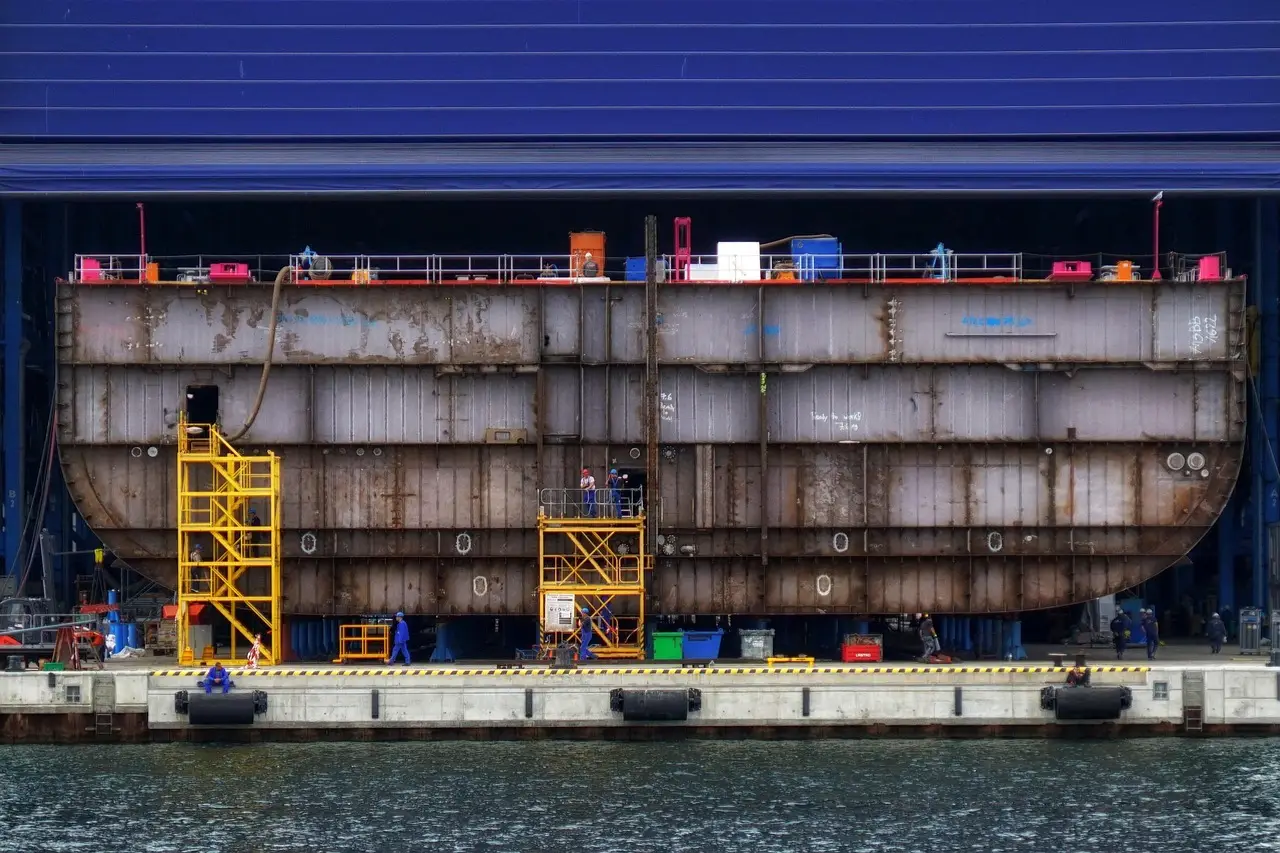
A block-fabrication shop cuts and welds steel plates into large ship sections. Workers paint the blocks, fit pipes and wires, then move them to a dry dock for final assembly. Pre-installing equipment, wiring and systems in a weather-protected workshop lets teams work in parallel. It also reduces difficult installations inside completed hulls.
The covered workshops support consistent quality. Ready-made blocks can be aligned and welded quickly, shortening final assembly.
Why does Cochin Shipyard still want 68 acres?
Cochin Shipyard still seeks the original 68-acre parcel despite halving planned output. The shipyard says the facility still needs the same footprint. That requirement has not been independently tested in the report. Cochin Shipyard has also dropped a previous plan to add 25 acres by reclaiming land into the sea.
Under the JV structure, Cochin Port Authority first proposed annual land rent of about ₹78 crore. Cochin Shipyard countered at ₹52 crore per year. The authority then offered ₹68 crore annually and was internally willing to close at ₹60-65 crore per year, while Cochin Shipyard held firm at ₹52 crore.
After going standalone, Cochin Shipyard offered about ₹32 crore annually. Cochin Port Authority rejected that figure. The two state-owned entities are still renegotiating commercial terms. The Ministry has pressed Cochin Shipyard to finalise the scope and details quickly.
Why has the land lease stalled?
The site adjoins the international container transhipment terminal at Vallarpadam. Dubai-based DP World Ltd operates that ICTT. The proposed 68 acres form part of an 80-acre parcel. The Keralam government owns the 18 acres at Ramanthuruth.
Cochin Port Authority had sought those 18 acres without success. Cochin Shipyard then approached the V D Satheesan government directly. The government agreed, citing the project's employment potential.
Of the proposed 68 acres, 47 sit inside the ICTT and are earmarked for the terminal's second phase, complicating the port authority's attempt to recover them. The authority ringfenced the tract with a compound wall when allocating the SEZ site. DP World neither uses the land nor pays lease rent. It refused the return request, citing phase-two needs.
How does the ₹32 crore proposal work?
Cochin Shipyard says fixed annual revenue is no longer viable for a standalone project. It has offered 5% of profit before tax instead. Its ₹32 crore package contains three components:
- ₹17 crore in lease rent under the port's Scale of Rates.
- ₹10 crore as a 5% PBT share from the fourth year of commercial operations, with the stated amount assuming 100% capacity utilisation and full performance.
- ₹5 crore in vessel-related charges, supported by a cash-flow statement given to the authority.
Cochin Port Authority prefers only fixed lease revenue to insulate itself from downside risk. Its ₹68 crore offer was based on the existing per-acre revenue from the ICTT. That benchmark lets the authority argue it earns the same revenue as it does from the ICTT operator if an auditor questions the deal.
Cochin Shipyard recently signed an agreement to convert its internally built international ship repair facility into an equal JV with Dubai's Drydocks World. The authority fears a repeat: a low initial lease followed by a JV partner. A later JV would also leave the authority explaining itself to the Comptroller and Auditor General (CAG).
What alternatives are under consideration?
At a board meeting held a few days ago, the Customs Commissioner of Kochi suggested cold storage facilities to meet rising demand from seafood exporters in the area. The commissioner sits on the Cochin Port Authority board. Alternatives for the adjoining SEZ parcel include a logistics park, food-processing zone or free trade warehousing zone (FTWZ).
The authority calls the parcel the last remaining site in that port belt. Shipbuilding would bring only ₹32 crore in annual land rent. It would also remove land for vessel- and cargo-charge projects for 60 years.
A source warned: “It is not that the Cochin Port Authority will get ₹32 crore a year in land lease rentals. But, for the next 60 years, if there is no land available for developing cargo-related projects for the port to grow, it will be in deep trouble.”
Cochin Shipyard rejected moving the fabrication plant elsewhere. The selected site lies just across the water from its shipyard. Huge hull blocks can then move on barges more easily than by road.
No construction start, commissioning date or firm export customer appears in the report. The 50,000-60,000 tonne figure remains a plan until the lease and footprint are settled.
via Google News: Shipbuilding (Source)
More from James Calloway
Show full bio
Correspondent covering technology and product news in commercial shipping for industry professionals at Vessels.
224 articles