Estonia launches 45-metre Euroguard warship in €95m consortium build
Baltic Workboats launched Euroguard, a 45-metre prototype warship, in a €95 million consortium project; 2027 sea trials will test remote and autonomous control.
Adjustments
- 45-metre Euroguard, an €95 million prototype warship, launched by Baltic Workboats at Nasva, Saaremaa
- President Ülle Madise christened Euroguard on 18 November
- European Defence Fund contributes €65 million; participating countries and companies provide €30 million
- 2027 sea trials with the Estonian Navy will pit remote shore control against autonomous on-board navigation
- Largest warship built in Estonia since the country regained independence in 1991
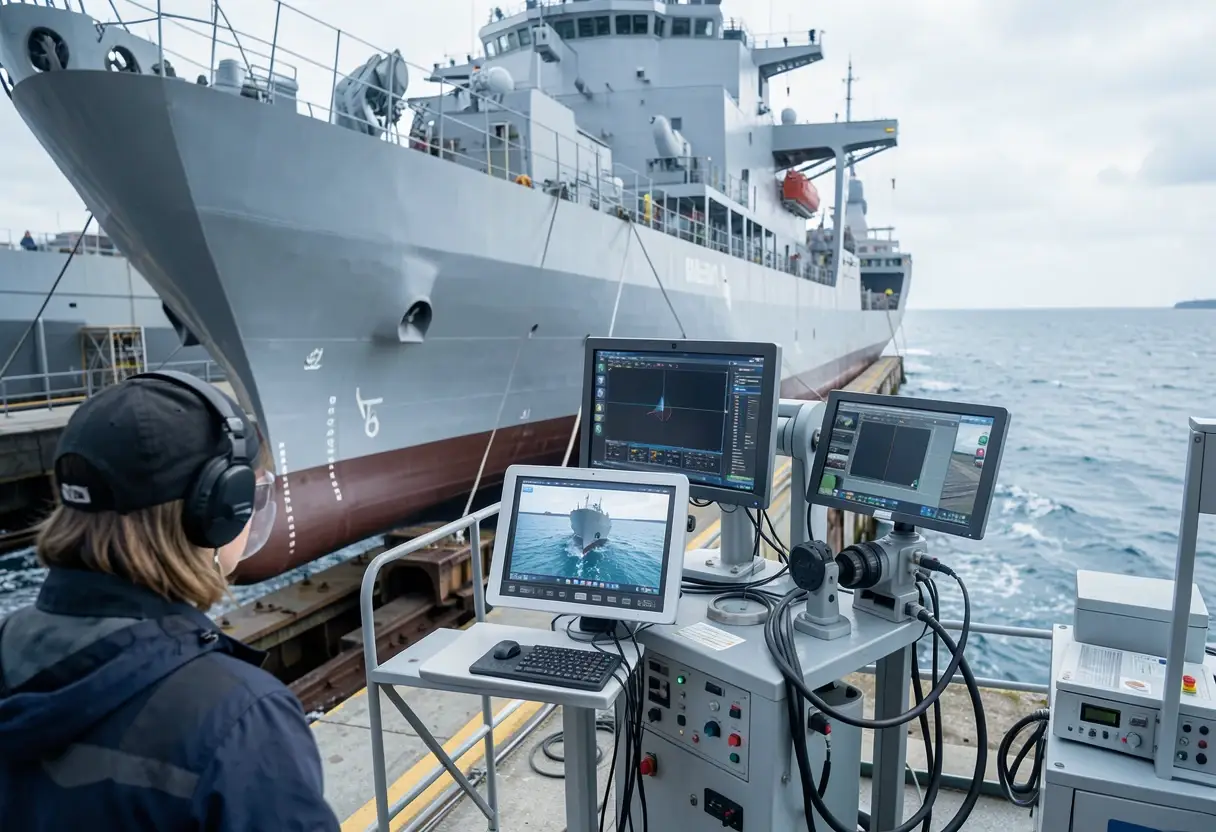
President Ülle Madise christened Euroguard on 18 November at Nasva, the home port of Baltic Workboats on Saaremaa. The ship measures 45 metres (148 feet). The project costs €95 million. Together they make it the largest warship built in Estonia since the country regained independence in 1991.
The yard has run for 26 years. It employs about 200 people. It has built nearly 300 vessels for customers around the world, and it designs and builds aluminium and steel workboats through to patrol craft. Euroguard changes the register of the place. It is a full-scale prototype, and its first assignment is to serve as a floating test bed.
Margus Vanaselja, chairman of Baltic Workboats, said: "Ships have been built in Estonia and sold abroad for centuries. Warships, however, we have ordered from abroad, relying instead on the experience of our allies."
What does €95 million buy?
The numbers describe a coastal test platform rather than a fighting ship, with a payload envelope of up to 100 metric tons and a hull 9.4 metres (31 feet) across.
- Length: 45 metres (148 feet)
- Beam: 9.4 metres (31 feet)
- Draught: no more than 3 metres (10 feet)
- Payload: up to 100 metric tons, depending on the equipment fitted
- Propulsion: hybrid, designed for at least 20 knots
- Range: at least 2,000 nautical miles, with stays of up to ten days at sea
The shallow draught suits the coastal waters it was designed for. The payload does the talking: fitted one way, Euroguard searches for naval mines; fitted another, it monitors seabed around critical infrastructure, or deploys and controls unmanned craft. Search and rescue and environmental monitoring also sit inside the envelope.
Who builds what?
France's Naval Group and Thales, Italy's Leonardo, Spain's Navantia, Norway's Kongsberg and the Dutch shipbuilder Damen sit inside the industrial consortium. Baltic Workboats leads it and carries out the build and fit-out of the prototype. The Estonian Centre for Defence Investments coordinates the work of the participating governments.
The European Defence Fund contributes €65 million. The remaining €30 million comes from the countries and companies taking part. Research partners stretch wider still: the Polish Naval Academy, Delft University of Technology in the Netherlands and RISE Research Institutes of Sweden.
Ahto Pärl, the consortium director, said: "It was us who were given the lead on such a large-scale project, even though the consortium includes several of Europe's top defence companies."
What will the 2027 trials test?
In 2027, engineers take Euroguard into Estonian waters with the Estonian Navy. Technologies developed across ten European countries face their first combined test at sea.
Two modes of sailing run side by side. In one, an operator ashore steers the vessel remotely. In the other, the ship plans its own route, detects obstacles and avoids collisions using its onboard systems. Neither earns a verdict until it performs in real conditions, so partners can judge which tasks a future naval crew could safely direct from the shore and which the vessel can safely handle alone.
Why GENSA may outlast the hull
One product of the project will stay largely invisible at the quayside. The partners built a common technical framework, known as GENSA, for bringing equipment from different manufacturers together aboard a naval vessel. For a ship that changes jobs by exchanging equipment, interoperability matters as much as deck space.
Jüri Saska, the project manager, said: "The ship is the most visible part of this project, but just as valuable is GENSA, the common system architecture for European naval vessels that we developed together."
If the framework holds at sea, its value runs beyond Euroguard. A team designing another European warship could reuse that integration work rather than solve the same engineering problem afresh.
For Nasva, the near-term prize is commercial as much as technical. Baltic Workboats believes the experience puts it in a position to design and build future warships for Estonia's own navy with its partners. How close it has come gets clearer next year, when Euroguard leaves the shelter of Nasva harbour and the Estonian Navy helps put it to the test.
via Google News: Shipbuilding (Source)
More from Tom Whitfield
Show full bio
Staff writer covering companies, deals and strategy in commercial shipping for industry professionals at Vessels.
32 articles
Linked entries
- Boskalis-Van Oord-Rohde Nielsen JV wins Gothenburg fairway deepening
- Rijeka picks Končar for 17.5 MW shore power at two terminals
- Gothenburg Awards Fairway Dredging Contract for Mega-Boxship Access
- Port of Blyth unveils 3-hectare plan and 1m channel deepening
- Three bidders vie for Rs 117.33bn VOC marine package