Trump's $2bn Shipyard Push Meets a Math Problem in Philadelphia
A $2bn Philadelphia yard expansion promises 7,000 jobs at $20-plus an hour, but trainees can't pass math tests and only four of 55 high schools teach welding.
Adjustments
- A $2 billion investment aims to lift a Philadelphia shipyard from under 2 to up to 20 vessels a year, adding 7,000-plus jobs over five years.
- Only 4 of the district's roughly 55 high schools offer welding training.
- Only about half of district seniors in trade programs scored competent or advanced on the NOCTI assessment last school year.
- Rhoads Industries starts submarine-building apprentices at $25 per hour; underwater welders can top $100,000 by age 25.
- Estimates put the national training need for the shipbuilding revival at up to 250,000 workers.
A $2 billion White House-backed plan to lift a Philadelphia shipyard from under two vessels a year to as many as 20 runs into an awkward bottleneck: high school seniors who can't add fractions. The revival, announced as part of President Donald Trump's 2025 push to rebuild American shipbuilding, promises more than 7,000 jobs over five years. Most start above $20 an hour — nearly triple Pennsylvania's $7.25 minimum wage.
The gap between the promise and the pipeline is the story. Many teens are behind on the math needed to pass trade placement tests, some balk at the physical risk, and most have never heard of shipbuilding as an industry at all.
What does the money actually buy?
The unnamed company behind the yard expansion plans to add the jobs over five years. Employers at the Navy Yard are already bidding for bodies with pay. Rhoads Industries, which builds submarines, offers apprentices $25 per hour to start. Recruiters say young workers who move fast through certification in high-risk niches like underwater welding can clear $100,000 a year by age 25.
The training side is thinner. Only four of the district's roughly 55 high schools offer welding. A few charters, private schools and nonprofits run programs too, which leaves most of the city's teenagers, in the words of Carol de Fries of the City College for Municipal Employment, outside the loop. "We need to build the pipelines for them to get access to these opportunities," she said.
Who's teaching, and what's missing?
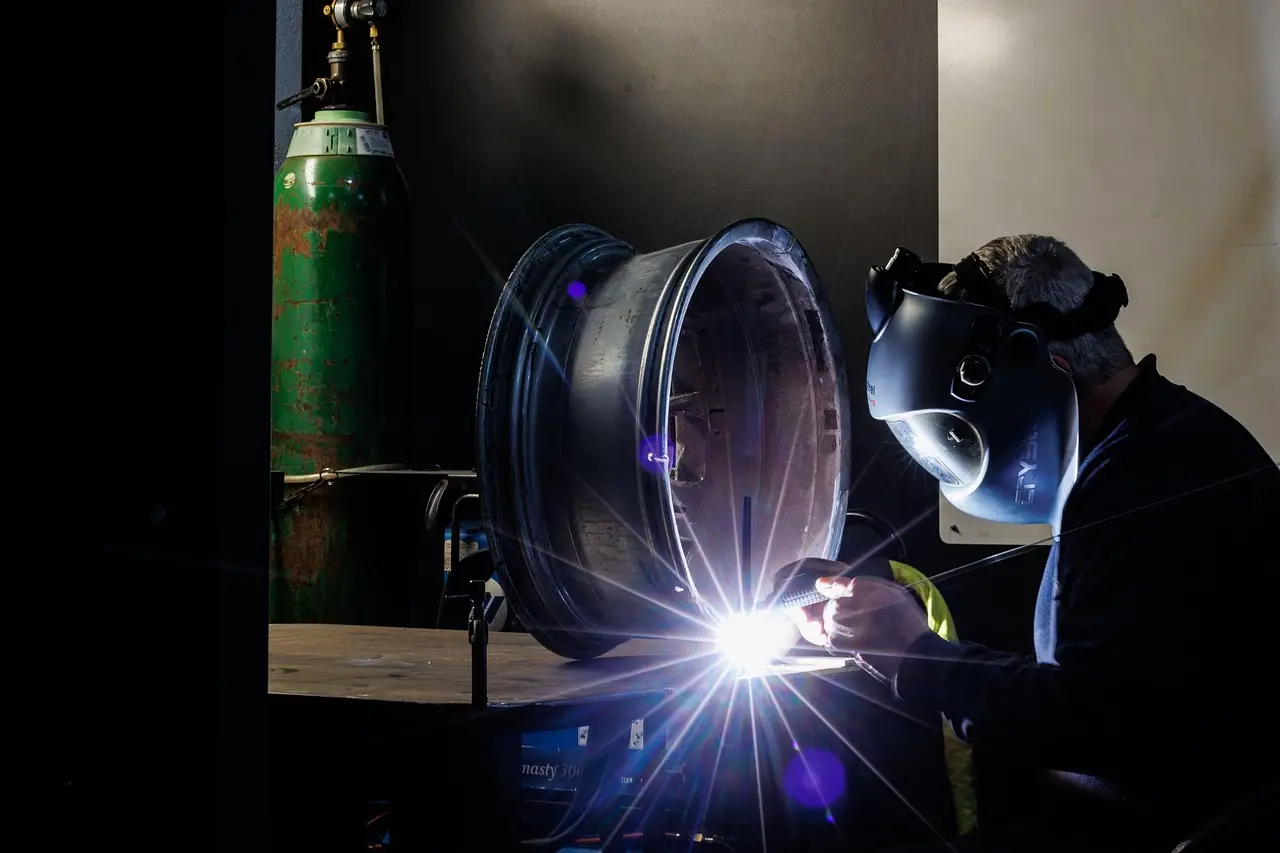
In the basement of Ben Franklin High School, retired ironworker Harry Graham runs welding three periods a day; 24 students share 16 practice booths. "They've got incentives to graduate," he said. "They want the high paying job."
Down the hall, Adam Ring teaches the district's only precision machining program, in a classroom holding several $50,000 CNC machines. He says he spends much of his time teaching math — even basic addition. "It's all technical language and jargon," Ring said. "Tons of machining jobs are related to college-level skills." That cuts against the popular framing of these jobs as a clean option for students skipping college.
The numbers back him up. Last school year, only about half of district seniors in construction and manufacturing programs scored competent or advanced on the NOCTI, the state-required assessment. Only a quarter of district high school students scored proficient on the state math test. Graham says some 10th graders arrive unable to add fractions or read a ruler, and most lean on calculators — little use on trade union tests, which bar them.
Can the workforce scale nationally?
If Philadelphia works, it becomes a template. Estimates circulating around the revival put the national training need at up to 250,000 new workers, with Baltimore and Mobile also angling for youth pipelines. "The question becomes, how do you create interest, and then house and upskill that interest in a way that is actually truly accessible to anyone across the city?" asked Maya Heiland, apprenticeships director at the Community College of Philadelphia. Her verdict on the current effort: "I don't think that that's happening."
Ron Sizer, who runs the college's advanced manufacturing program — much of it free, funded by the U.S. Navy — has a demand problem, not a vacancy one. "I have more job opportunities than seats," he said. His students juggle childcare and family duties; his instructors could earn far more in industry. The city, meanwhile, is expanding middle school trade programs for 12- and 13-year-olds to funnel students toward vocational high schools.
The pay pitch isn't universal bait. Aahayla Capers, 17, quit after nearly three years of welding training — arc-flashed multiple times, now wearing glasses. "If I can't move around and move my body, I don't want to do it," she said. She's joining the military instead. Kristopher Purnell, 17, is staying the course toward underwater welding, arc flash and minor burns notwithstanding. His motivation, taped to the side of his helmet: "It's the pay stub."
via Google News: Shipbuilding (Source)
More from Amara Osei
Show full bio
Senior reporter covering technology and product news in commercial shipping for industry professionals at Vessels.
47 articles
Linked entries
- Hanwha Hunts a Third US Shipyard Beyond Philly and Austal USA
- Hanwha Hunts a Third US Shipyard as Navy Order Race Tightens
- Suspended Section 301 Port Fees on Chinese Ships Left Off Trump-Xi Agenda
- India Dangles $10 bn Shipbuilding Pitch at Global Yards and Lines
- India seeks nearly US$10bn for five coastal shipbuilding clusters