India bets ₹10,000 crore on home-built boxes to cut import reliance
India's ₹10,000 crore CMAS targets 7.5 lakh TEUs of annual domestic container output, cutting two million empty-box imports, with Maersk already ordering 1,000 Indian-built units.
Adjustments
- CMAS provides ₹10,000 crore over five years, announced in the Union Budget 2026-27
- Target: 7.5 lakh TEUs of annual domestic container production capacity
- India currently imports nearly 2 million empty containers per year
- Maersk ordered 1,000 additional Made-in-India containers from DCM Shriram Group
- Bharat Container Shipping Line plan covers ₹99,149 crore for 51 vessels
- Scheme expected to create ~3,000 direct and 50,000+ indirect jobs
India will spend ₹10,000 crore over five years to build a domestic container manufacturing industry, targeting annual production of 7.5 lakh TEUs (a lakh equals 100,000) and cutting the roughly two million empty boxes it imports each year. The Container Manufacturing Assistance Scheme (CMAS), announced in the Union Budget 2026-27, is the money behind Delhi's wider push to harden its trade and logistics network against freight-rate swings and supply-chain shocks.
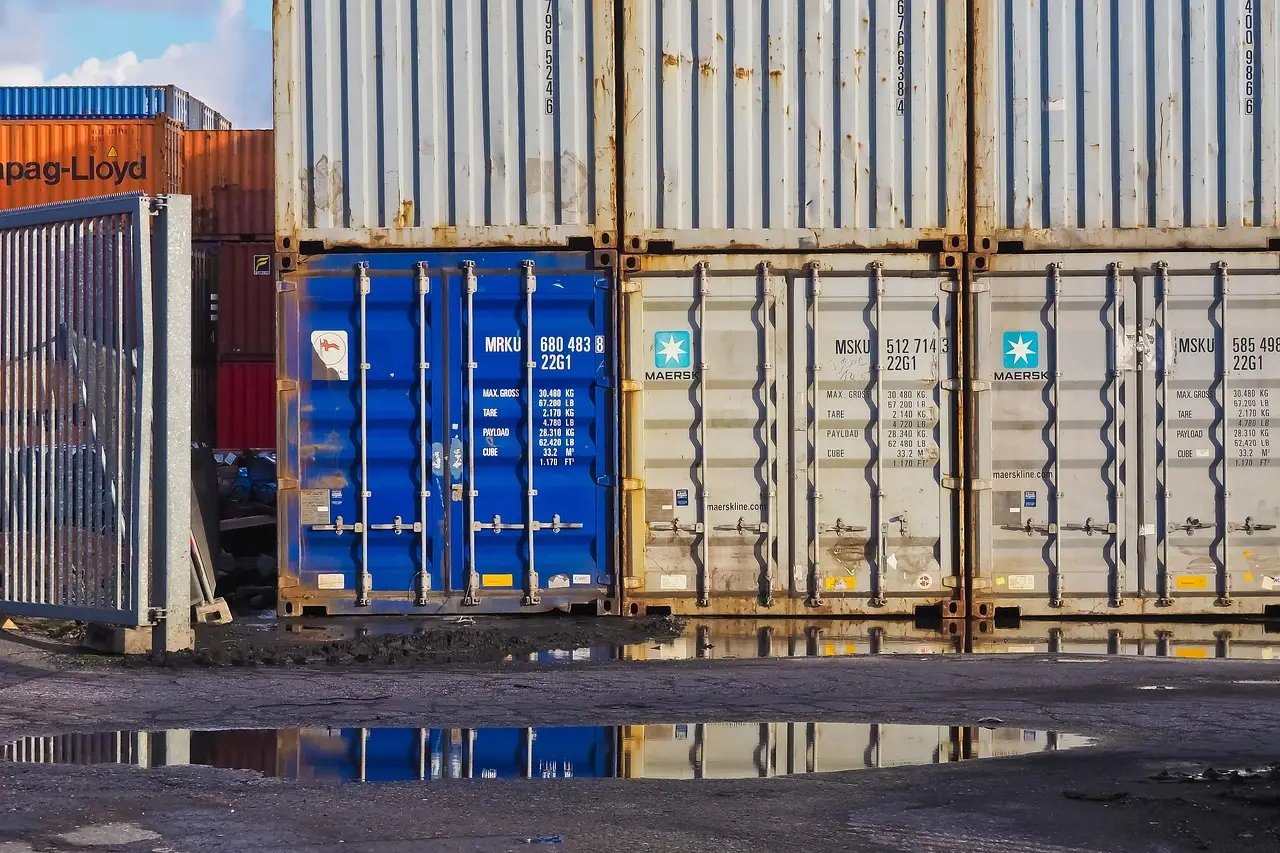
A steel box rolled out of a shed in Dadri, Uttar Pradesh, last July tells you why the government thinks this can work. That unit was India's first domestically manufactured EXIM container, built for A.P. Moller–Maersk at the Maersk-CONCOR inland container depot. It met ISO standards and the International Convention for Safe Containers (CSC), the UN-linked certification that lets a box move through global shipping networks without reinspection.
Maersk hasn't stopped at a prototype. The carrier has ordered 1,000 additional Made-in-India containers from the DCM Shriram Group — an early commercial vote of confidence in a sector that barely existed two years ago.
What does the ₹10,000 crore actually pay for?
The scheme spreads its money across several fronts rather than betting on a single instrument.
- Capital assistance for new Greenfield manufacturing plants, built from scratch on undeveloped sites
- Support for Brownfield expansion, adding capacity at existing units
- Operational assistance to sharpen the competitiveness of domestic manufacturers
- Funding for testing infrastructure, skilling and capacity building
The government expects around 3,000 direct jobs and more than 50,000 indirect ones. The scheme should also pull through demand in allied industries producing corner castings, wooden flooring frames and Corten steel — the weathering steel grade the box industry builds from.
Why does India need its own boxes?
The arithmetic is blunt. India imports nearly two million empty containers annually to meet domestic requirements and for repositioning empty units. Every disruption in Asian manufacturing hubs or spike in freight rates leaves Indian exporters exposed, because the steel boxes that standardise cargo movement between ships, rail and road come from elsewhere.
Most global capacity sits with a handful of manufacturers. India's two million TEU-plus import bill is exactly the vulnerability CMAS is designed to shrink. Domestic output at 7.5 lakh TEUs a year won't erase it, but it gives shippers a local alternative when repositioning costs bite.
Does the scheme stand alone?
No. CMAS plugs into a dense maritime agenda: the Maritime Amrit Kaal Vision 2047, PM Gati Shakti, the National Logistics Policy and the Sagarmala Programme.
In February 2026, the Ministry of Ports, Shipping and Waterways signed an MoU to establish the Bharat Container Shipping Line. The partners bring state depth: the Shipping Corporation of India, Container Corporation of India, Jawaharlal Nehru Port Authority, V.O. Chidambaranar Port Authority and Sagarmala Finance Corporation Limited. That initiative alone envisages investments of around ₹99,149 crore for a fleet of 51 container vessels of different sizes plus domestically procured containers.
Legislative reform is moving in parallel. The Merchant Shipping Act 2025, Coastal Shipping Act 2025 and Indian Ports Act 2025 update the regulatory framework for shipping, coastal trade and port governance. Digital programmes — One Nation One Port Process, the Maritime Single Window and e-Samudra — aim to cut documentation and speed port and shipping operations.
On the shipbuilding side, a separate ₹70,000 crore Shipbuilding Financial Assistance Package is intended to attract investment into maritime manufacturing.
What about the ports that will handle the boxes?
Capacity is expanding on the saltwater side too. Major projects underway include Vadhavan Port, the International Container Transshipment Port at Galathea Bay, Tuna Tekra Container Terminal and the Outer Harbour Container Terminal at V.O. Chidambaranar Port. Three Indian ports ranked among the world's top 30 in the Container Port Performance Index 2025, a World Bank-linked efficiency benchmark.
For carriers and box lessors, the takeaway is simple. India is moving from importer to manufacturer, with ₹10,000 crore of state money, a Maersk order book and a national fleet plan behind it.
via Google News: Container Shipping (Source)
More from Tom Whitfield
Show full bio
Staff writer covering companies, deals and strategy in commercial shipping for industry professionals at Vessels.
193 articles
Linked entries
- Shipping Corp of India tenders 22 ships in $3.2bn expansion drive
- India's Five-State Shipyard Plan Reaches ₹1.15 Trillion, But Nothing Is Approved
- India prepares ₹69,725-crore shipbuilding expansion
- SCI Goes Shopping: $3.2 Billion Tender Round Targets 22 Ships
- India Targets 120,000 GT of Ship Deliveries in 2026