Gateway Distriparks takes 8-year JNPA rail yard mandate
Gateway Distriparks will run and manage JNPA’s common rail yard for eight years, covering mixed-train segregation, container stacking and inter-terminal transfers on DFC-compatible lines.
Adjustments
- Gateway Distriparks will operate and manage JNPA’s common rail yard under an eight-year contract.
- Only two of JNPA’s five rail terminals have 1,500-metre DFC-compatible railway lines.
- Five yard functions fall under GDL: train handling, segregation, container stacking, transfers and related activities.
- GDL already operates a CFS at JNPA and says the contract supports similar management opportunities across India.
- Prem Kishan Dass Gupta says GDL will work with JNPA and port terminals on train movement, coordination and reliability.
By James Calloway
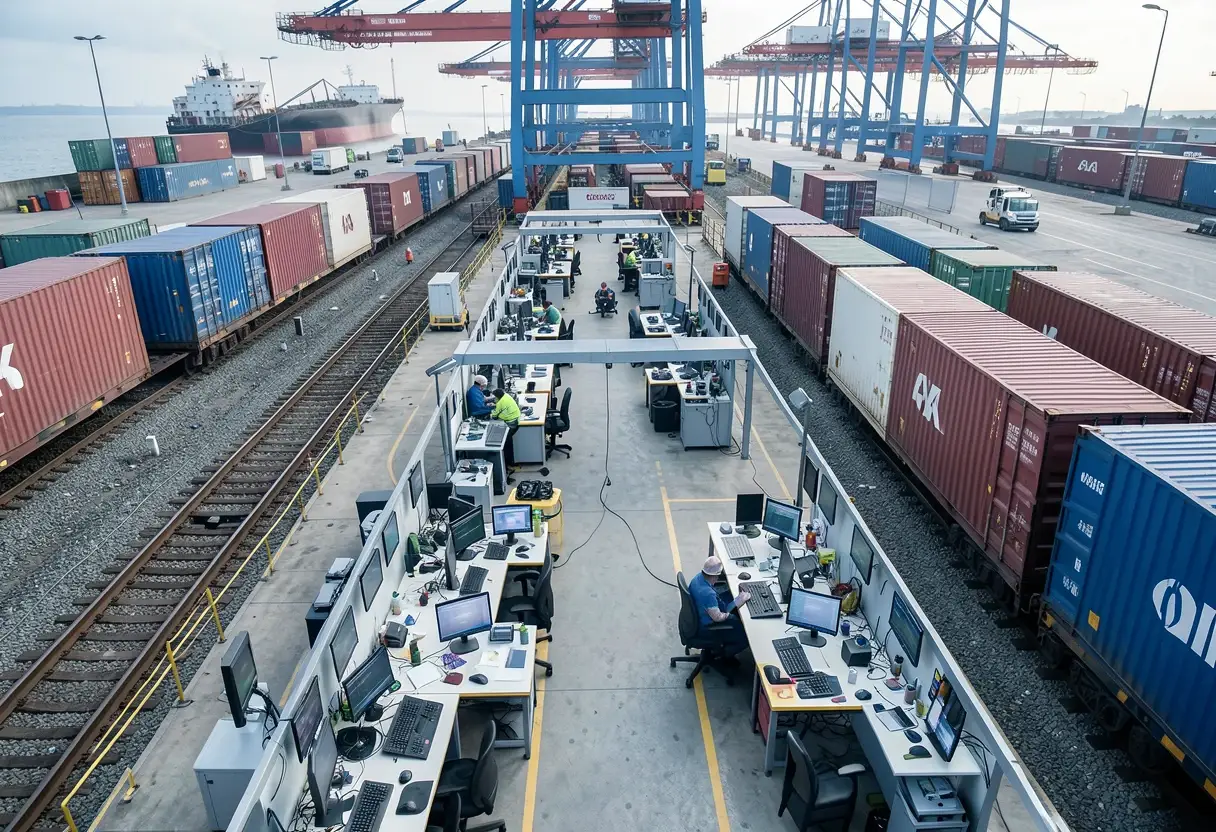
Gateway Distriparks Limited (GDL) will operate and manage JNPA’s common rail yard under an eight-year contract. The facility forms part of JNPA’s rail infrastructure and handles mixed container trains bound for different terminals.
What changes under the contract?
Under the contract, GDL becomes responsible for:
- Train handling and placement within the terminal.
- Segregation of mixed container trains.
- Container handling and stacking.
- Inter-terminal transfers.
- Associated yard activities.
The company expects the mandate to support more efficient train handling, improved coordination and optimal use of JNPA’s rail infrastructure. That work places train handling, segregation, container stacking and transfers under one operating manager.
The operating case is plausible, but without a baseline, volume forecast or timetable, users cannot test whether coordination and infrastructure utilisation will actually improve there.
What did Gupta commit to?
“We are pleased to take on this responsibility at JNPA, which is an important gateway for India's international trade. Rail connectivity plays a vital role in moving containers efficiently to and from the port, and we look forward to bringing our experience in rail operations to this facility,” said Prem Kishan Dass Gupta, GDL’s Chairman & Managing Director.
GDL will work closely with JNPA and the port terminals, Gupta said. The company aims to ensure smooth train movements, better coordination and reliable service for everyone using the rail network.
The commitments remain qualitative, because the announcement provides no service-level targets, safety metrics, equipment schedule or quantified forecast for trains or containers handled through the yard. No commencement date is given.
Why do the 1,500-metre lines matter?
Of JNPA’s five rail terminals, only two have 1,500-metre dedicated freight corridor (DFC)-compatible railway lines, including the common yard.
The lines are designed to accommodate long-haul container trains and support the handling and movement of rail-bound import and export cargo.
Infrastructure sets a clear operating purpose, although the announcement omits maximum consist length, daily slots, annual cargo volume and GDL’s equipment deployment at the yard. The release offers no throughput forecast for the eight-year term.
What should port operators test?
The first operating checkpoint is train placement. GDL controls handling and placement within the common yard, so performance there affects mixed trains serving several JNPA terminals. The second is segregation: mixed trains carry containers for different destinations, and the contract puts that work with GDL. The third is inter-terminal transfers, another duty assigned to the operator.
Published train volumes, handling cycle times, equipment performance and transfer results would let users judge the promised gains, but the announcement supplies none of those baselines.
Where does the expansion lead?\n
The mandate extends GDL’s service portfolio beyond its established container rail transportation, Inland Container Depot (ICD) and Container Freight Station (CFS) operations.
GDL already operates a CFS at JNPA. The company says the contract strengthens that presence and creates a platform to pursue similar management opportunities across India.
The award adds a national expansion angle, but no target list, tender schedule, capital commitment or revenue forecast yet supports GDL’s wider ambition.
For JNPA, GDL and cargo users, the practical test is whether the yard delivers steadier train placement, consistent segregation and more reliable inter-terminal transfers. The announcement sets the operating structure, but supplies no baseline, service target or published measurement against which users can judge delivery.
via Google News: Ports & Terminals (Source)
More from James Calloway
Show full bio
Correspondent covering technology and product news in commercial shipping for industry professionals at Vessels.
30 articles